


AI is being built, regulated, and resisted across the Global South at a pace that rarely makes it into mainstream tech coverage. Each edition tracks the developments that matter: new models, policy moves, funding gaps, and the harder question of who AI is actually for.
1. India is racing to build AI data centres, and a coastal city is bracing for the bill
Source: The New York Times · July 16, 2026
In Tarluvada, a village on the edge of Visakhapatnam, a one-gigawatt data centre is rising as part of Google’s $15 billion push into Andhra Pradesh, built alongside the Adani Group.
The state government has thrown in a 25% incentive arrangement, and IT minister Nara Lokesh is selling the city as India’s “data capital.” The people who live there are less convinced. They expect the project to pull scarce water and power out of the region and leave very few lasting jobs behind.
It is the clearest picture yet of the trade the AI build-out is asking of Global South communities: hand over your land, water, and electricity to subsidise a US hyper-scaler, and watch the upside flow to Big Tech and politically connected capital.
2. Nvidia wants to fix India’s chip shortage, and own the whole chain while doing it
Source: Inc42 · July 20, 2026
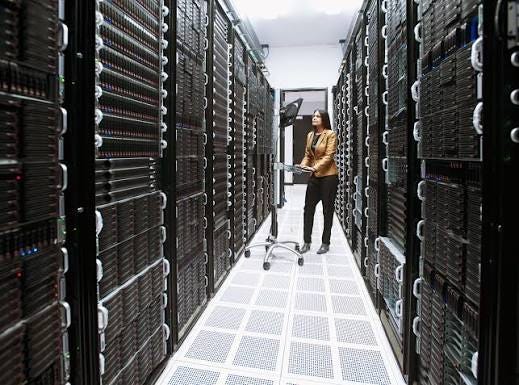
Nvidia has a new financing model for India’s “neocloud” startups. Instead of demanding the enormous upfront capital that GPUs require, it lets providers rent capacity and pays for it by taking a cut of their cloud revenue. That solves a real problem. It also deepens a dependency that is already extreme: of the roughly 18,700 GPUs in the IndiaAI Mission pool, about 14,500 are Nvidia’s. Yotta has ordered 20,736 Blackwell chips for close to $2.8 billion. ESDS signed a $1.25 billion deal for an 8,000-GPU cluster.
Analysts point out that Nvidia is now supplier, financier, investor, and customer in the same market, and Indian providers are earning in rupees while paying for chips in dollars.
This is the sovereignty trap hiding under India’s sovereign-AI language. The compute layer answers to a single US vendor operating under US export rules.
3. Google says it has now put over $1 billion into Africa, on its own terms
Source: Tech.africa · July 8, 2026
At its first Google Cloud Summit on African soil, held in Johannesburg on July 1 with President Cyril Ramaphosa in the room, Google announced it had passed the $1 billion digital-investment target it set for the continent.
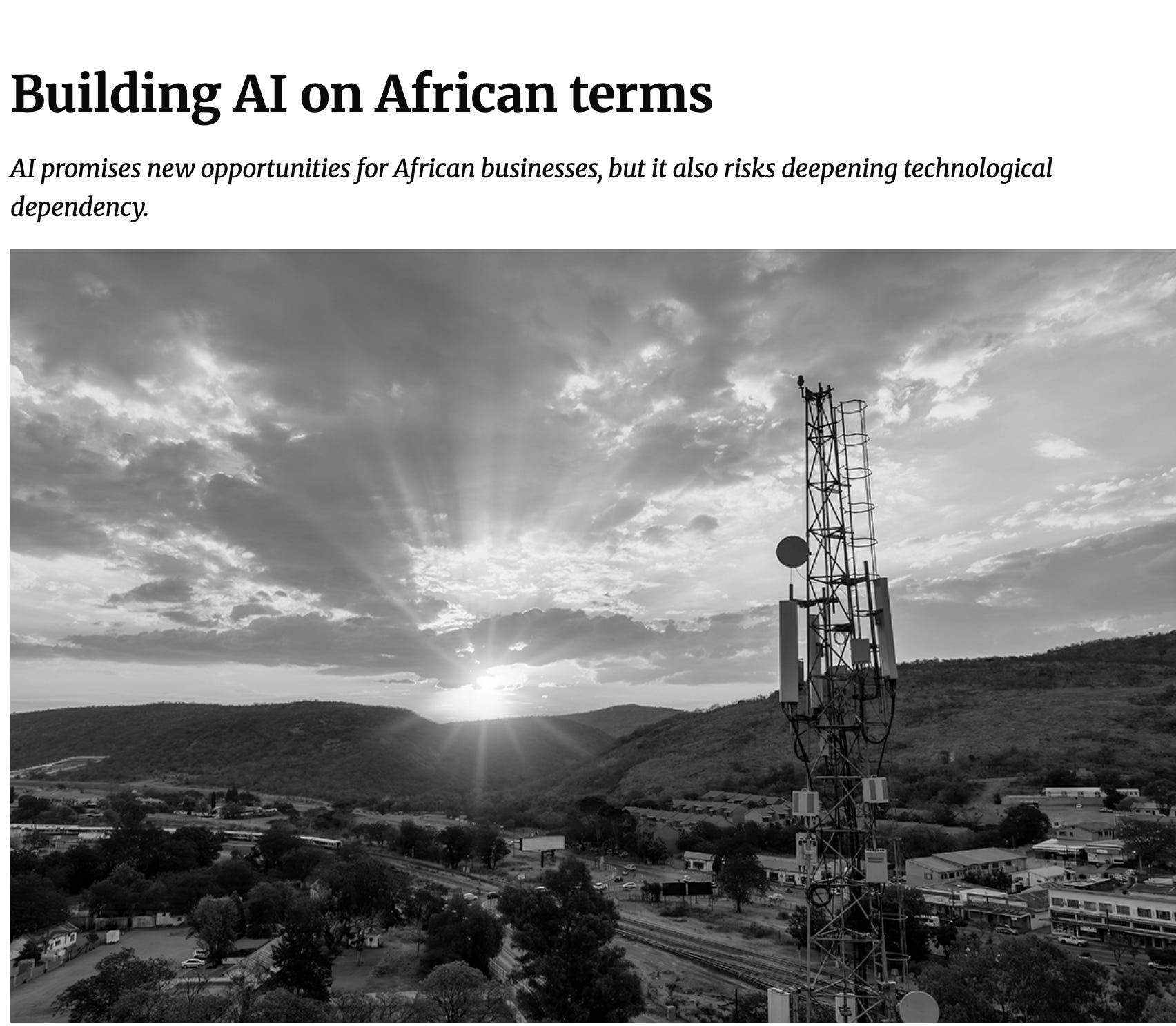
The list that came with it was long: Africa’s first Applied AI Lab in Ghana, backed by Google’s AI Futures Fund; a new South Africa digital exchange port in the Eastern Cape wired to Australia and India through the Umoja subsea cable; a creative-AI programme in Soweto; enterprise deployments with Vodacom, Naspers, Discovery, and Liquid C2. Africa’s AI infrastructure is genuinely being built. It is also being financed, routed, and shaped by a US company, which is the whole tension the continent keeps running into.
Another piece the resonates this point of view is this one: https://african.business/2026/07/long-reads/building-ai-on-african-terms-digital-sovereignty-beyond-localisation
4. Ten African states just signed into a China-led AI governance body
Source: Government of China / Xinhua · July 16, 2026
At the World AI Conference in Shanghai, 29 countries agreed to set up the World Artificial Intelligence Cooperation Organisation, an intergovernmental body headquartered in Shanghai, launched as Xi Jinping called for “equitable global AI governance.” Ten of the founding members are African: Algeria, Cameroon, the Republic of the Congo, Ethiopia, Kenya, Lesotho, Mozambique, Senegal, South Africa, and Zambia. The Western democracies that usually convene these things were not in the group. For a stretch of the Global South, the question of who writes the rules for AI is starting to get an answer, and the answer is being written in Shanghai.
5. Mexico built Latin America’s first Blackwell cloud, on American silicon
Source: Data Center Dynamics · July 6, 2026
Mexican firm Bleeding Edge, run by CEO Natán Rosengaus, switched on what it says is the first Nvidia Blackwell-based “neocloud” in Mexico and Latin America, at its campus in Querétaro. The facility is liquid-cooled, built to Nvidia’s reference designs for training and inference, and its entire initial capacity has already been booked by AI companies. This is Latin America trying to build its own accelerated compute rather than renting it from a US hyper-scaler, which matters. The catch is the same one India is living: the entire stack sits on imported Nvidia silicon, and it lands in Querétaro, a region already fighting over water.
6. Brazil’s electoral court put OpenAI and Anthropic on the hook for the 2026 vote
Source: The Rio Times · July 16, 2026
In Brasília, the head of Brazil’s superior electoral court signed agreements bringing OpenAI, Anthropic, and ElevenLabs into its permanent programme against disinformation. It is the first time AI model developers, and not just platforms, have been treated as responsible parties. Alongside them sit Meta, Google, TikTok, X, LinkedIn, Telegram, and Kwai.
The rules ban campaign deepfakes, require AI-content labelling, impose a 72-hour blackout on synthetic content before the vote, and stop chatbots from recommending candidates, with a 24-hour takedown obligation.
Civil-society groups are skeptical about enforcement, and the full agreement texts are still unpublished. Even so, this is a Global South state reaching upstream and telling US model-makers they are co-responsible for what their systems produce, ahead of what Brazil is calling its first real AI election.
Also this fortnight
India will draft a dedicated AI law. IT Secretary S Krishnan said on July 3 that the country is ready to move past its outdated IT rules and write standalone AI legislation, building on February’s deepfake takedown mandate. Rediff/PTI
HCLTech is building its own AI data centres. A ₹3500 crore commitment (around $365 million) and a new subsidiary, pitched explicitly around India’s “digital sovereignty.” The Hindu
Raxio crossed $380 million in committed capital as Roha and Meridiam raised their stakes, with contracted power up sixfold year on year across six African markets. African-Startups.com
Brazil’s 247 Data Centers brought in Al Gore’s Just Climate and Brazilian asset manager Kinea to fund hyperscale campuses around São Paulo. Data Center Dynamics
Africa’s power wall. Schneider Electric’s Faith Waithaka notes Kenya’s grid already runs at 78–84% of its 2.3GW capacity, while a single AI training facility could draw close to 1GW on its own. IT News Africa
“Sovereignty is more than local data.” A Harvard researcher argues African AI independence means owning compute, not just storing data locally, while Kenyan workers are still paid under $2 an hour to clean and label training data. African Business